Second Life: Series 11 !
The wait is over! Series 11 has officially dropped!
Hikizome: Painting the Colors of Kyoto onto Timeless Comfort
With a history spanning nearly 1,000 years, the Zabuton (座布団) holds a distinguished place in Japanese culture. In earlier eras, it was far more than a simple floor cushion; it was a symbol of status and authority, reserved for the Imperial Court, Shoguns, and high-ranking Buddhist priests.
Today, the zabuton has seamlessly integrated into daily life. While providing physical comfort, it also embodies profound cultural values: kutsurogi—a sense of deep relaxation—and omotenashi, the art of welcoming guests with sincere care and understated grace.
For our fabric, we utilize Hikizome (引き染め), or "pull-dyeing." In this traditional Japanese technique, fabric is stretched taut while artisans hand-paint water and pigment with a brush to create a delicate, ethereal blurring effect. Also known as bokashi-zome ("blur-dyeing"), this method results in a soft, painterly finish that cannot be replicated by machines.
We are proud to introduce two exclusive colors inspired by iconic sightseeing landmarks in Kyoto. These hand-dyed textiles offer a perfect harmony of traditional craft and the classic Kyoto zabuton aesthetic.
All of our products are made-to-order. Each piece is handcrafted specifically for you once your order is confirmed. Please allow approximately 14-20 business days for production before your item is shipped.
Our craftsmen and women carefully craft each piece to ensure the highest level of comfort, and we thank you for your patience while awaiting its arrival.
Handling & Care
This product contains cotton filling. To ensure its longevity, please follow these care instructions:
Washing
Drying
Storage
Important Notes on Product
Hikizome: Painting the Colors of Kyoto onto Timeless Comfort
With a history spanning nearly 1,000 years, the Zabuton (座布団) holds a distinguished place in Japanese culture. In earlier eras, it was far more than a simple floor cushion; it was a symbol of status and authority, reserved for the Imperial Court, Shoguns, and high-ranking Buddhist priests.
Today, the zabuton has seamlessly integrated into daily life. While providing physical comfort, it also embodies profound cultural values: kutsurogi—a sense of deep relaxation—and omotenashi, the art of welcoming guests with sincere care and understated grace.
For our fabric, we utilize Hikizome (引き染め), or "pull-dyeing." In this traditional Japanese technique, fabric is stretched taut while artisans hand-paint water and pigment with a brush to create a delicate, ethereal blurring effect. Also known as bokashi-zome ("blur-dyeing"), this method results in a soft, painterly finish that cannot be replicated by machines.
We are proud to introduce two exclusive colors inspired by iconic sightseeing landmarks in Kyoto. These hand-dyed textiles offer a perfect harmony of traditional craft and the classic Kyoto zabuton aesthetic.
All of our products are made-to-order. Each piece is handcrafted specifically for you once your order is confirmed. Please allow approximately 14-20 business days for production before your item is shipped.
Our craftsmen and women carefully craft each piece to ensure the highest level of comfort, and we thank you for your patience while awaiting its arrival.
Handling & Care
This product contains cotton filling. To ensure its longevity, please follow these care instructions:
Washing
Drying
Storage
Important Notes on Product


As times change, this piece of traditional Japanese hospitality remains constant. Today, zabutons are an essential part of daily life in modern Japan, offering comfort and relaxation for floor seating. Beyond the home, they are also widely used in meditation practices to deepen focus and mindfulness.


ALL MADE BY HAND


Not all Zabutons are made the same, even though they are all used for floor seating.
Here’s how to tell a Kyoto Zabuton from ordinary zabutons—and why it offers a more comfortable sitting experience.

The three-pronged stitch on top of the Zabuton, known as toji, helps keep the cotton filling evenly distributed.
Unlike ordinary Zabutons, which typically use a cross-shaped toji, the Y-shaped toji is unique to Kyoto Zabutons. The tail of the Y indicates the front of the Zabuton, making it easier for the user to orient the cushion.

The front of a freshly made Zabuton has a gentle dome shape, reminiscent of kamaboko fish cake, while the back remains flat. This distinctive form is created by placing more cotton at the center—where the body’s weight naturally rests—to provide exceptional sitting comfort.
Each Zabuton is carefully crafted by skilled artisans, with the user’s comfort always in mind.
As the Zabuton gradually settles over time, its surface remains stable and smooth. Artisans capable of creating Zabuton that age so evenly and beautifully flat are considered truly skilled.
Please note:This linen zabuton features a center tassel only and does not include corner tassels by default.
To add four corner tassels, please select "Yes" under "Add optional corner tassels".
MAKE IT YOURS


*Please note: XL size is unavailable due to fabric width constraints.
Hikizome (literally “pull-dyeing,” referring to the motion of drawing a brush across the fabric) is a traditional Japanese dyeing technique in which a bolt of fabric is stretched taut and carefully brushed by hand with layers of water and dye. This method is also known as bokashizome, meaning “gradual shading” or “blur dye.”
Each piece is hand-dyed by skilled artisans, one by one. This careful process embodies the beauty of tradition.
Available in two Hikizome shades—Kamogawa Blue and Arashiyama Bamboo Green. Each is inspired by Kyoto’s iconic scenery, from the gentle flow of the Kamo River to the serene paths of the Arashiyama Bamboo Grove. Enjoy your moments of rest with colors that reflect your personal style.


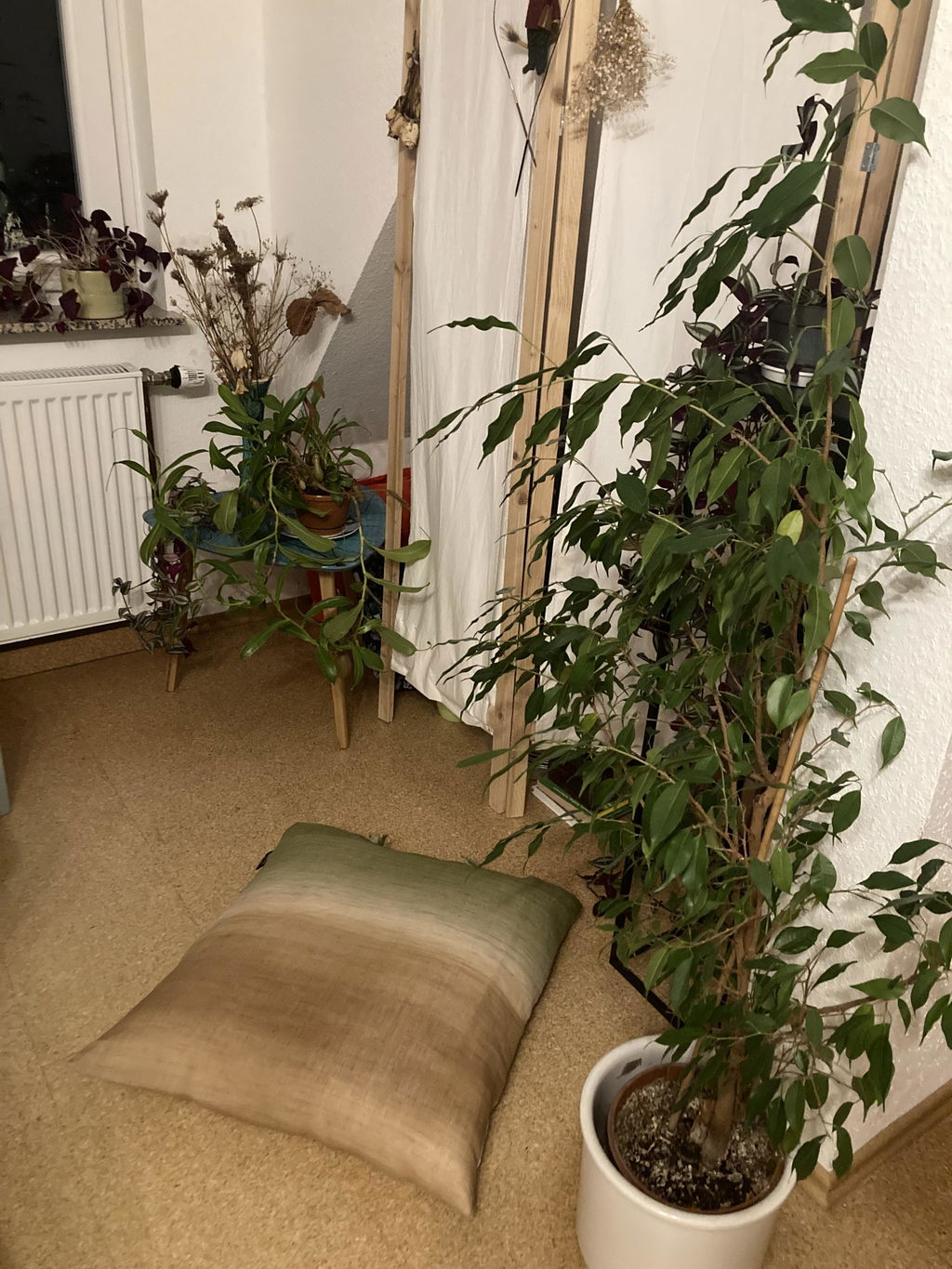
I ordered a custom made zabuton cushion with a Hikizome linen cover. As I am personally not a big fan of zippers, I asked about alternatives and the very friendly customer service representative gave me excellent guidance. After around three weeks the cushion arrived and was just like I hoped for. It's quite wonderful to own such an artisinal piece crafted to ones wishes. All in all I'm very happy!
We are so glad we were able to customize something that makes you very happy daily.
Thank you for the 5-star rating for the cushion.
Please enjoy it daily!
Happy Kutsurogi,
Valery
Team Takaokaya
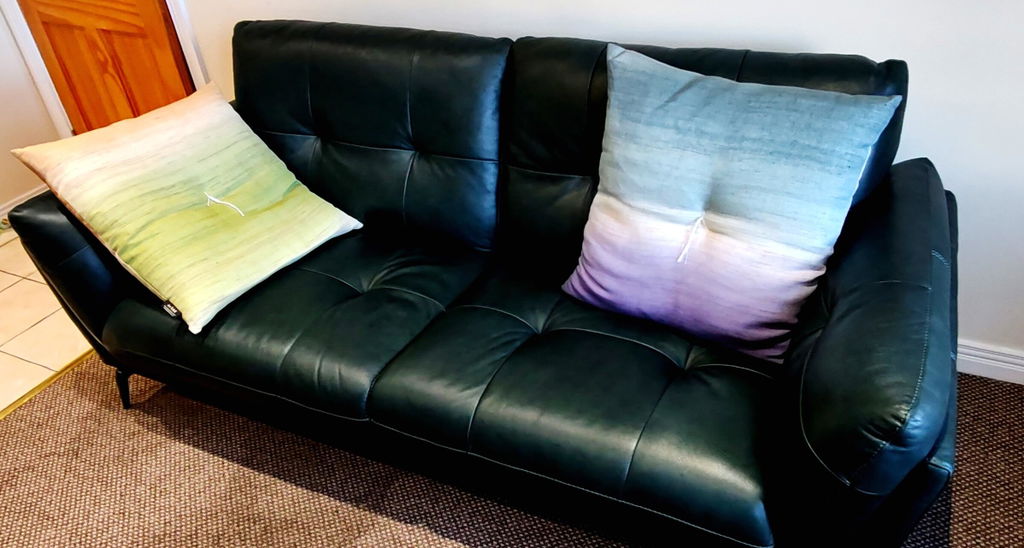
The Zabuton cushions are really beautifully crafted and wonderfully designed.
Really enjoying them so far!
Big thank you to the team Takaokaya!
The Hikizome linen Zabuton cushions look absolutely gorgeous against your black leather couch, Allan!
We are happy that we can add a touch of Japanese aesthetics and at the same time bring comfort and relaxation to your home.
Happy Kutsurogi,
Valery
Team Takaokaya
The company Takaokaya was shown on Japanese television and I was delighted with their work of art and tradition. Ordering online was easy, and I am very pleased with the customer service with international customers.
Fabulous products that are made with great precision, quality, and the finest technique.
I wish the company in the future good luck and prosperity.
It is wonderful to know that our Zabuton cushions brings you delight and that you are very pleased with our customer service, M.M.
Your recognition and positive review helps us to continue striving in preserving the century-old techniques used in handcrafting all our products. :)
Thank you for your love and support!
Nanako
Team Takaokaya