This store requires javascript to be enabled for some features to work correctly.

About aizome-fu
Kumotori Cloud
Take Bamboo
Sakura
Asanoha
Seikai
Shima
about zabuton
a piece of inherited Japanese hospitality
Zabuton cushions are traditional Japanese cushions with nearly 1000 years of history. Originally, zabuton cushion symbolises a person's high status, and were only used by people such as theemperor and members of the imperial court, or most revered of Buddhist monks. Now, zabuton cushions are part of Japanese daily life and are central to Japanese omotenashi culture of hospitality. Our Kyoto zabuton cushions are still handmade using traditional futon techniques but innovated for greater stability and comfort. They are very versatile and can be used in different spaces, such as the modern living room.
Come relax with us and enjoy the moment with our Kyoto Zabuton, crafted masterfully to reflect Kyoto’s rich cultural way of life. Use one of our zabuton cushions and you’ll never want an ordinary cushion again!
relaxation in different styles
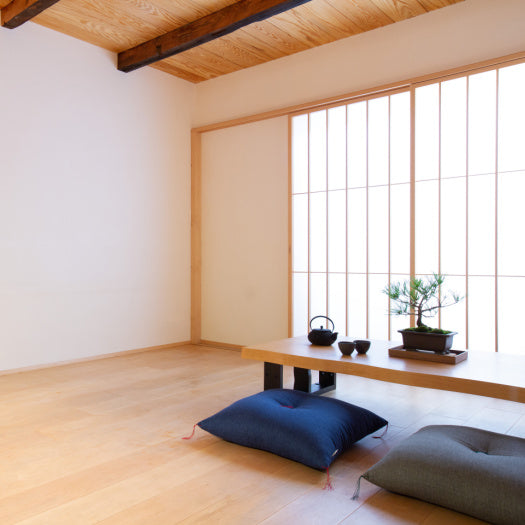
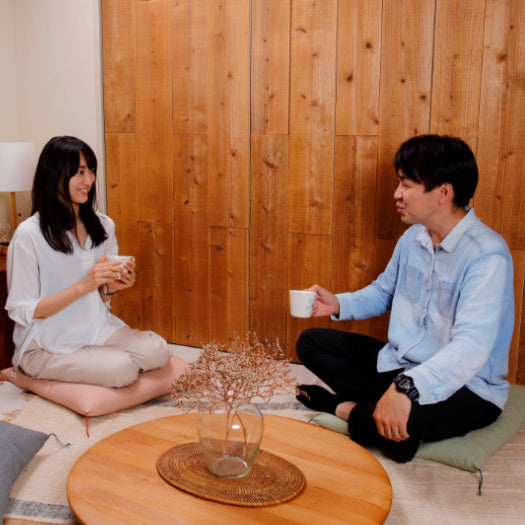
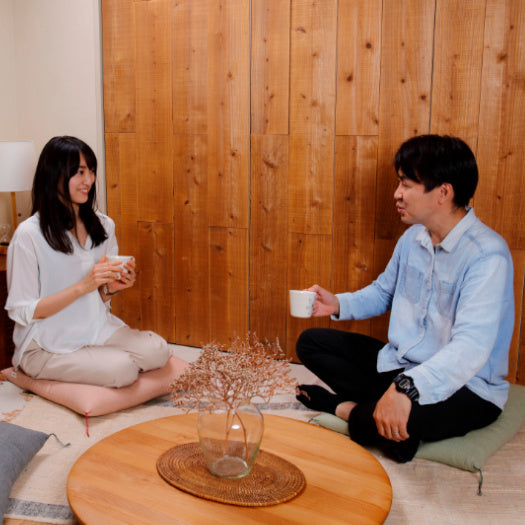
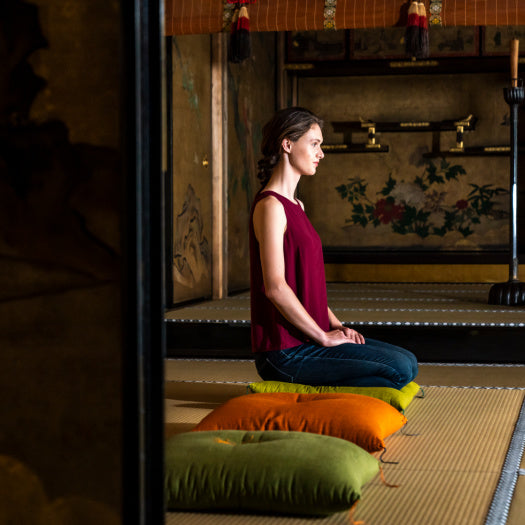
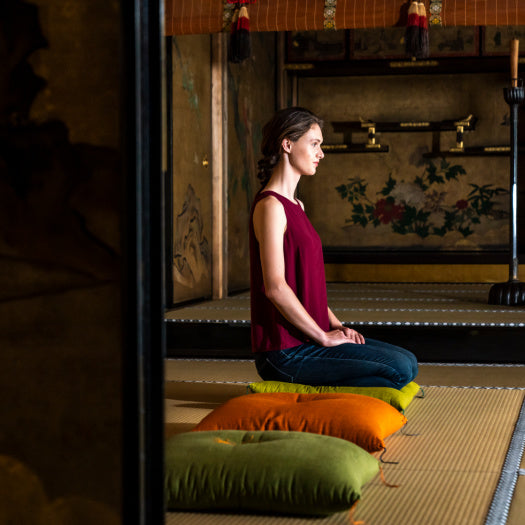
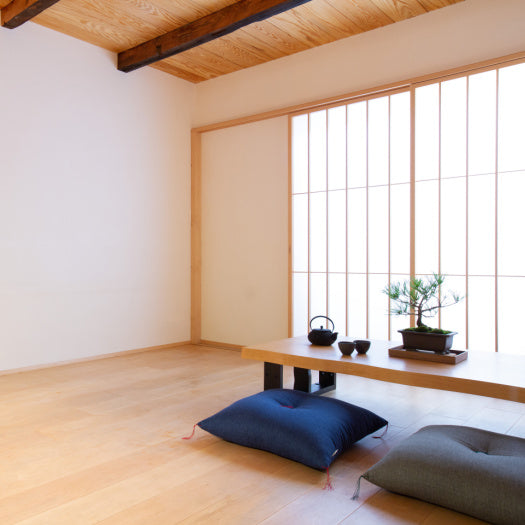
When times change, a piece of inherited Japanese hospitality tradition remains. Today, zabutons are used daily for floor seating to provide comfort and relaxation in modern Japan. Zabutons can be found not only in Japanese households but also in meditation scenes to increase mindfulness.
welcoming the guest
Serve the zabuton when guests visit to home as our Omotenashi hospitality.
Daily relaxation
Have a seat on the zabuton and spend a nice time to relax.
Be mindfulness
Gaining popularity for meditation use to take care of our self.
Why can we relax so well?
The Importance of Our Craftsmen
The secret of relaxation
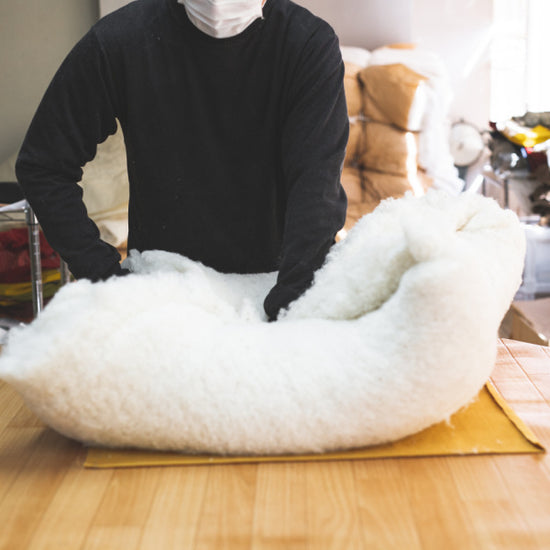
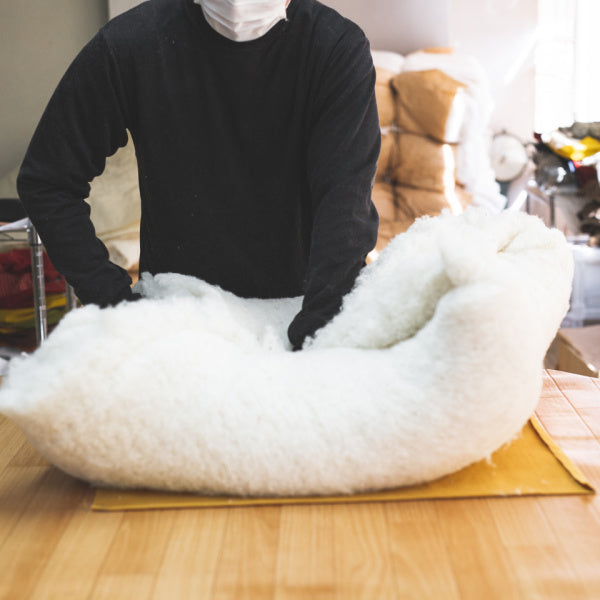
Stuffing by skillful craftsmen
The stuffing stage is one of the most important parts of the production process. It does not only determine the comfort level of the finished products, but it is also what allows the product to keep its integrity even with frequent use. The zabuton has a large amount of filling in the center part where the weight is applied. Our skilled craftsmen are concerned with the longevity of their creations, so they would like to make sure that even in the future, each product is still as comfortable as the day it was made.
The craftsman's experience and care of "thinking about the user and putting inner filling", which cannot be achieved by machine production, create "comfort" and "relaxation".
“Omotenashi”: The Spirit of Kyoto hospitality
Three Characteristics of Kyoto Zabuton
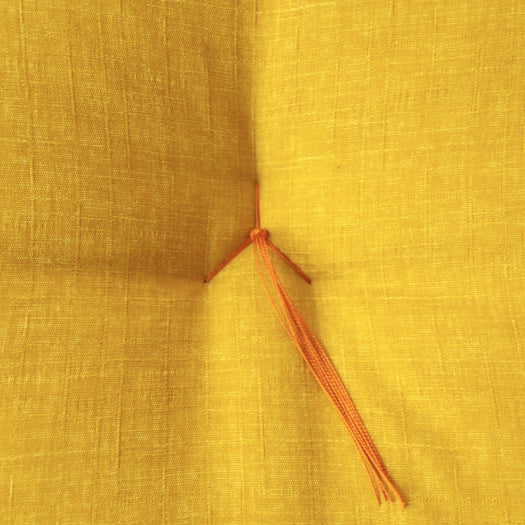
”Sampo-toji”: Three-pronged stitch
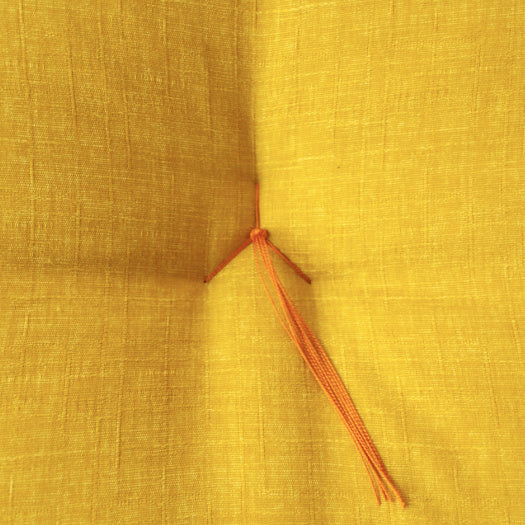
The three-pronged stitch on the top of a zabuton, known as “toji,” has the function of keeping the
cotton evenly distributed. Most zabuton use a “toji” in the shape of a cross, but Kyoto zabuton use
the three-pronged stitch shown the picture. The tail of the “Y” shape points to the front of the zabuton for the user’s convenience. When you serve the zabuton to your guest, you do not mistake the direction of the zabuton by looking at this stitch.
The three-pronged stitch on the top of a zabuton, known as “toji,” has the function of keeping the
cotton evenly distributed. Most zabuton use a “toji” in the shape of a cross, but Kyoto zabuton use
the three-pronged stitch shown the picture. The tail of the “Y” shape points to the front of the zabuton for the user’s convenience. When you serve the zabuton to your guest, you do not mistake the direction of the zabuton by looking at this stitch.
”Kamaboko-gata”: Dome shape
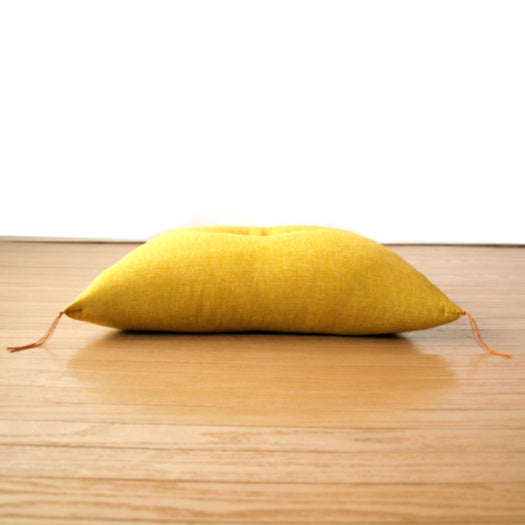
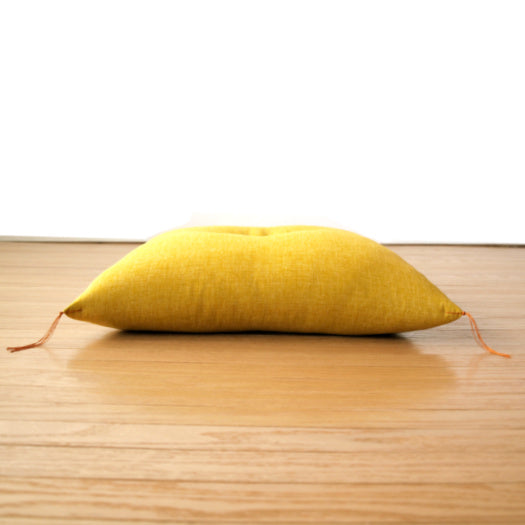
The underside of the zabuton cushion is flat, which ensures the stability of the cushion. However, the top side of the zabuton is filled to create a dome-like shape, reminiscent of the shape of a Japanese fishcake called kamaboko. This shape not only provides plushness but it also prevents the zabuton cushion from thinning too quickly, even with frequent use. The plump and natural curves of the zabuton cushion's shape indicate the excellent craftsmanship of the artisan.
”Sumi-fusa”: Tasselled Corners
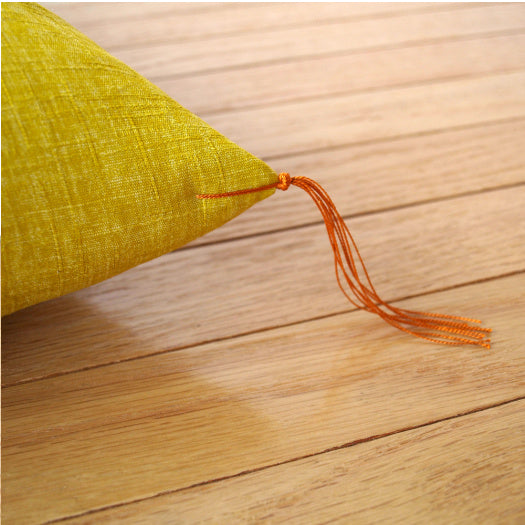
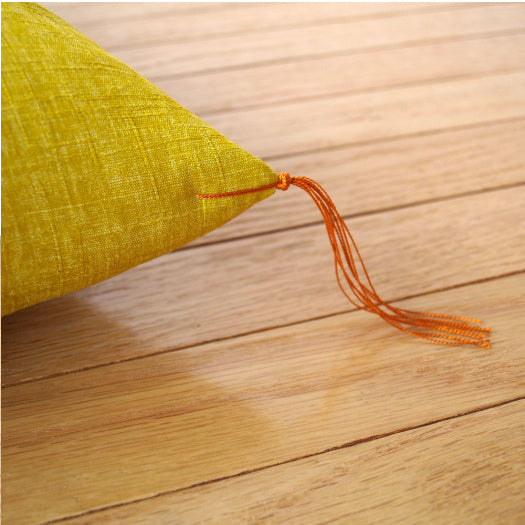
The corner tassel stitches on a zabuton cushion are called “sumi-fusa”. It does not only function as a decoration, but it is also a traditional technique used to make sure that the cotton filling does not come out from the corners of the cushion. In ancient Japan, it is believed that putting tassels on the corners of the cushions prevents evil from possessing the user.
Create with takaokaya's craftsmen
finding something different?
kyoto zabuton collection